September 28, 2026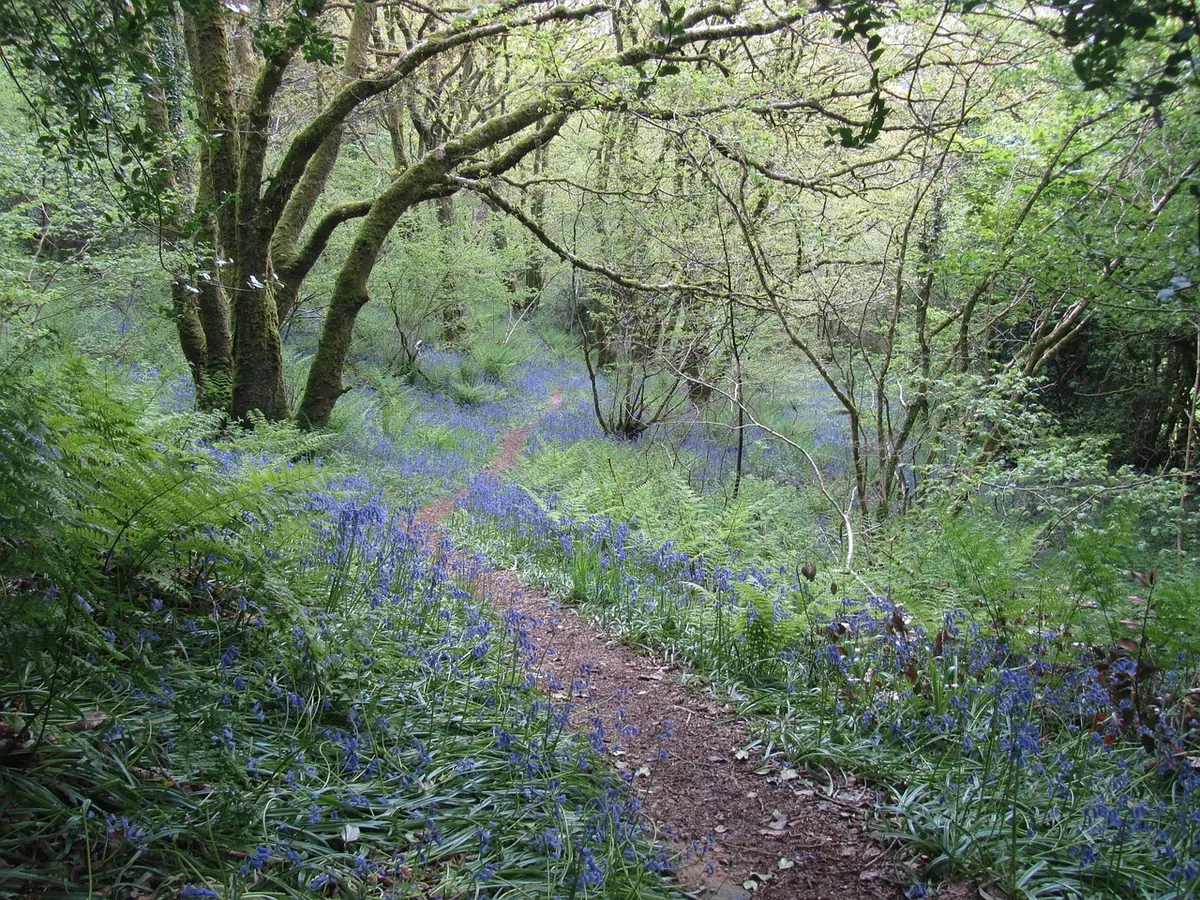
Dorset wakes up slowly. In March the beech woods above Wimborne are still bare and the heath at Arne looks like it has been holding its breath for months. Then, somewhere around the second week of April, the county catches up all at once: bluebells under the trees, chiffchaffs in the blackthorn, the first terns settling on the lagoon at Brownsea. Spring is the best time to walk here. Paths are quiet, the light is soft, and the gorse along the cliff tops smells faintly of coconut. What follows is where to go, when to go, and how to enjoy it without trampling the things you came to see.
When the bluebells peak
Bluebells flower before the canopy closes over them, so the window is short. In most Dorset woods the show runs from the last week of April into the middle of May, and at any single site it can be over in a fortnight. Warm, sheltered slopes and the west of the county go first; the heavier clay woods around Shaftesbury and the Cranborne Chase hold on a little longer.
Weather matters more than the calendar. A cold, late spring pushes everything back by a week or two, and a dry April shortens the display. If you only have one free morning, aim for a weekday, and go early or late in the day. Low sun through the trees is worth more than any camera setting, and you will have the paths to yourself.
Woods worth the drive
Badbury Rings and the Beech Avenue
The Iron Age hillfort north-west of Wimborne sits in a ring of beeches, with bluebells spilling down the ramparts and into the surrounding woodland. The tree-lined avenue running towards Kingston Lacy is one of the county's great spring walks, and it is flat enough for anyone. Parking is at the rings; there are no facilities, so bring what you need.
Thorncombe Wood, near Dorchester
A proper old English wood behind Hardy's Cottage at Higher Bockhampton, with bluebells, wood anemones and a haze of wild garlic along the lower paths. The car park is small and fills fast on a sunny Saturday, so an early start is not optional in late April. Combine it with a loop across the heath for a two-hour walk.
Powerstock Common
Dorset Wildlife Trust's reserve in the west of the county, threaded by the line of an old railway. Expect bluebells, early purple orchids and a good chance of hearing a cuckoo. The ground is wet in places after rain, so boots rather than trainers.
Garston Wood and the Cranborne Chase
A quiet RSPB reserve near Sixpenny Handley that is as much about birdsong as flowers. Nightingales arrive in late April, and the bluebells in the older stands are thick enough to stop you mid-step. Late May is still worth a visit here when other woods have gone over.
Melbury and the Shaftesbury downs
North Dorset's beech hangers above Melbury Abbas flower slightly later than the coast, which makes them a useful fallback if you missed the peak further south. The lanes are narrow; park considerately and walk in.
What else is moving and flowering
Spring in Dorset is not only blue. Wood anemone, lesser celandine and primroses come first in March, followed by wild garlic in damp hollows and cowslips on the chalk downland. Adders bask on the heath in March and April, often within a few feet of a path; give them room and they will move off on their own.
On the coast, Durlston Country Park near Swanage has guillemots, razorbills and peregrines on the cliffs from April, with early purple orchids on the slopes behind. Brownsea Island is at its best for Sandwich terns and avocets, and it is the easiest place in the county to see a red squirrel at close range. In Poole Harbour, spring is also the season when migrating ospreys pass through, usually alone and usually gone by the time someone points at the sky.
Coastal walks for spring
Spring is the sweet spot on the South West Coast Path. The summer crowds have not arrived, the gorse is out, and the ground is firm enough for a decent pace.
Old Harry Rocks and Ballard Down
From South Beach at Studland it is a gentle hour to the chalk stacks, then a steady climb over Ballard Down with Swanage below you. The full walk into Swanage and back is around five miles. Views stretch from Poole Harbour to the Needles on a clear day.
Durdle Door to Lulworth Cove
Short, steep and deservedly popular. The steps down to the arch are hard on the knees, and the climb back up is a genuine puff. Go before nine in the morning or after five, and check tide times if you want to walk the beach at low water. Beyond, the path climbs towards White Nothe; the army ranges east of Lulworth are closed on firing days, so check the published opening times before planning a walk to Tyneham or Worbarrow Bay.
Kimmeridge to St Aldhelm's Head
A rougher, quieter clifftop walk of about six miles return, past Clavell Tower and the ledges at Kimmeridge Bay, on to Chapman's Pool and the old chapel on the headland. The Etches Collection at Kimmeridge is a good wet-weather stop.
Golden Cap from Seatown
A short, sharp climb to the highest cliff on the south coast, then a long ridge walk with Lyme Bay laid out below. Footpaths are steep and muddy after rain, and livestock graze much of the route.
Bluebell and heathland etiquette
- Stay on the paths. A bluebell colony can take years to recover from being walked through, and the bulbs are shallow.
- Never pick or dig up bulbs. Cut flowers wilt within hours anyway.
- Keep dogs on the path in woodland and on a lead on heathland between March and July, when ground-nesting birds are sitting.
- Do not dump garden bulbs or plant waste in the countryside; garden varieties cross with native bluebells and weaken the colonies.
- Take photographs from the edge of the flowers rather than lying in the middle of them.
- Close gates, take litter home, and leave nothing but footprints in the mud.
Before you set out
A few practical habits make a spring day out in Dorset much better.
- Check the tides. Beaches and undercliff routes at Durdle Door, Kimmeridge and Charmouth change completely at high water, and there are places you do not want to be cut off.
- Check range opening times if your walk crosses the Lulworth area, and road closures if you are heading for a village car park on a weekend.
- Arrive early. Small car parks at Thorncombe Wood, Garston Wood and South Beach fill by mid-morning in late April and May.
- Dress for two seasons in one day. A windproof layer and grippy boots will do more for you than any app.
- Stay back from cliff edges, especially after rain. The Jurassic Coast erodes constantly and the edge is not always where the map says.
- Plan a lunch stop. Village pubs fill quickly on spring weekends, and a table booked in advance saves a long detour at one o'clock.
Allow more driving time than you think between the coast and the northern woods; Dorset's lanes are slow and the satnav is optimistic. Take a paper map, and if you are walking alone in remote country, tell someone your route and expected return. Beyond that, the county asks very little of you in spring. Turn up, walk quietly, and it does the rest.
Photo: glarcombe / Pixabay